
Welcome to our world
ABOUT US: DIET, LIFESTYLE AND GUT MICROBIOTA IN HEALTH
The research lines of the Microbiota, Food and Health Research Group (www.masmicrobiota.com) focus on investigating how diet and lifestyle factors influence human health, and how these effects are mediated through the gut microbiota. We study both extrinsic factors (such as dietary patterns, physical activity, and other lifestyle habits) and intrinsic factors (genetic background) that modulate the composition and function of the gut microbiota and, consequently, contribute to health and disease.
In recent years, strong scientific evidence has demonstrated that dietary patterns and lifestyle play a central role in the prevention and development of chronic diseases, partly through their impact on the gut microbiota. Therefore, our research aims to understand how specific foods, nutrients, and bioactive compounds interact with the intestinal microbiota and host metabolism, influencing inflammatory status, oxidative stress, and metabolic health.
Our studies are carried out using Next Generation Sequencing (NGS) techniques, including both targeted amplicon sequencing (16S rRNA gene and ITS/ITS2 regions) and shotgun metagenomic sequencing, together with real-time PCR (qPCR) to characterize microbial communities. In parallel, we determine key biological markers such as blood levels of lipopolysaccharide (LPS), lipopolysaccharide-binding protein (LBP), pro- and anti-inflammatory cytokines, and faecal levels of short-chain fatty acids (SCFAs) and calprotectin, among others. Research is conducted in animal models as well as in human intervention and observational studies.
We perform comprehensive bioinformatics and statistical analyses of massive sequencing data, including demultiplexing, quality filtering, feature picking, taxonomic assignment, and sequence alignment to generate BIOM tables. Downstream statistical analyses and visualization tools are then applied. We develop customized pipelines according to the specific needs of each project, using free-distribution software validated by the international scientific community and reported in indexed journals.3
Below are the main programs used in our group:
QIIME 2™ (Quantitative Insights Into Microbial Ecology)
Open-source bioinformatics platform for microbiome analysis from raw DNA sequencing data, including amplicon and shotgun metagenomics, widely considered the reference standard in microbial bioinformatics.
https://qiime2.org
PICRUSt2 (Phylogenetic Investigation of Communities by Reconstruction of Unobserved States)
Software for predicting functional profiles (e.g., KEGG orthologs and pathways) from marker gene sequencing data.
https://github.com/picrust/picrust2
MaAsLin2 (Multivariate Association with Linear Models)
Tool for identifying multivariable associations between microbial features and metadata in population-scale microbiome studies.
https://huttenhower.sph.harvard.edu/maaslin2
ANCOM-BC2 (Analysis of Compositions of Microbiomes with Bias Correction 2)
Statistical method for differential abundance analysis of compositional microbiome data with bias correction.
https://github.com/FrederickHuangLin/ANCOMBC
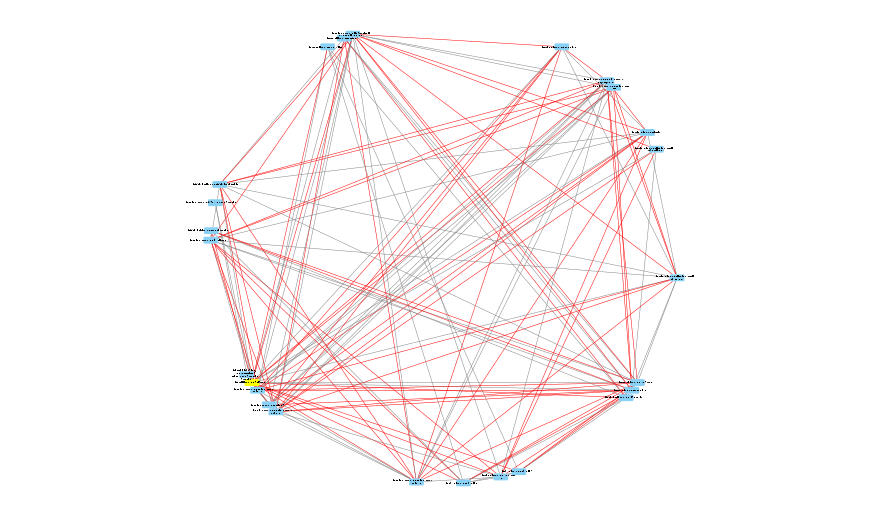
Cytoscape is an open source software platform to visualize complex networks and integrate them with any type of attribute data.